
The Ultimate Beginner’s Guide to Low Maintenance Flowering Plants for Pots India
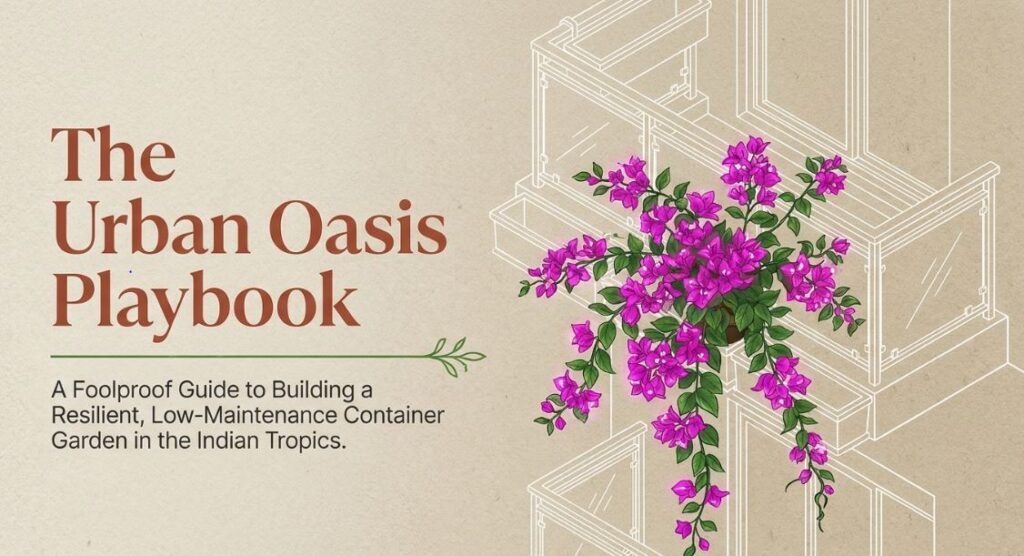
Cultivating a Vibrant Sanctuary with Minimal Effort
Imagine stepping out onto your balcony or veranda every morning to a vibrant explosion of colors and a refreshing floral scent. For many urban dwellers in India, the dream of a lush garden often feels out of reach due to hectic schedules, limited space, and the scorching tropical heat. However, gardening does not have to be a full-time job. By choosing the right species, specifically low maintenance flowering plants for pots india, you can create a stunning botanical sanctuary that thrives with minimal intervention.
This comprehensive guide will walk you through everything you need to know. From selecting the hardiest species that withstand the Indian sun to mastering the art of “lazy gardening,” we have you covered. Whether you live in the humid coastal regions of Mumbai or the dry plains of Delhi, these plants will transform your home into a living masterpiece.
1. Why Start a Container Garden with Low-Maintenance Plants?
Starting a garden can feel overwhelming for a beginner. Many people worry about plants dying or the sheer amount of time required for upkeep. This is exactly where low-maintenance plants come into play. They act as the perfect training wheels for any aspiring green thumb.
The Beauty of Containers
In India, urban living often means living in apartments with restricted outdoor areas. Consequently, pots and containers are your best friends. They offer incredible flexibility, allowing you to move your plants to follow the sun or protect them from heavy monsoon rains. Furthermore, pots prevent the spread of soil-borne diseases and make pest management much easier than in a traditional ground garden.
Saving Time and Energy
Low-maintenance plants are genetically hardier. They have evolved to survive in tough conditions, meaning they require less frequent watering and can tolerate occasional neglect. If you travel for work or simply have a busy lifestyle, these plants remain resilient. They won’t wilt the moment you skip a single watering session. Therefore, you spend more time enjoying the view and less time stressing over maintenance.
Gardening is a proven stress-buster. Engaging with nature, even in small pots, lowers cortisol levels and improves mindfulness. When you choose easy-to-grow flowers, you experience the “win” of a blooming plant without the frustration of high-mortality rates. Therefore, starting with hardy varieties builds your confidence and provides a sense of accomplishment that enhances your overall well-being.
2. Setting the Foundation: The Ideal Potting Mix and Containers
Before you bring your plants home, you must prepare their living environment. In container gardening, the soil is the only source of nutrition and hydration for your plant. If the foundation is weak, even the hardiest plant will struggle.
Choosing the Right Pot
In India, you will primarily find three types of pots: terracotta, plastic, and ceramic.
- Terracotta (Clay) Pots: These are highly recommended for the Indian climate. Because they are porous, they allow the roots to breathe and help regulate temperature by evaporating excess moisture. They are traditional, aesthetic, and eco-friendly.
- Plastic Pots: These are lightweight and hold moisture longer. However, they can heat up significantly in direct sunlight, which might cook the roots of sensitive plants. If you use plastic, ensure they are placed in semi-shade.
- Ceramic Pots: These look beautiful and are great for indoor or semi-shaded areas. However, ensure they have adequate drainage holes at the bottom, as ceramic often lacks the breathability of clay.
The "Gold Standard" Potting Mix
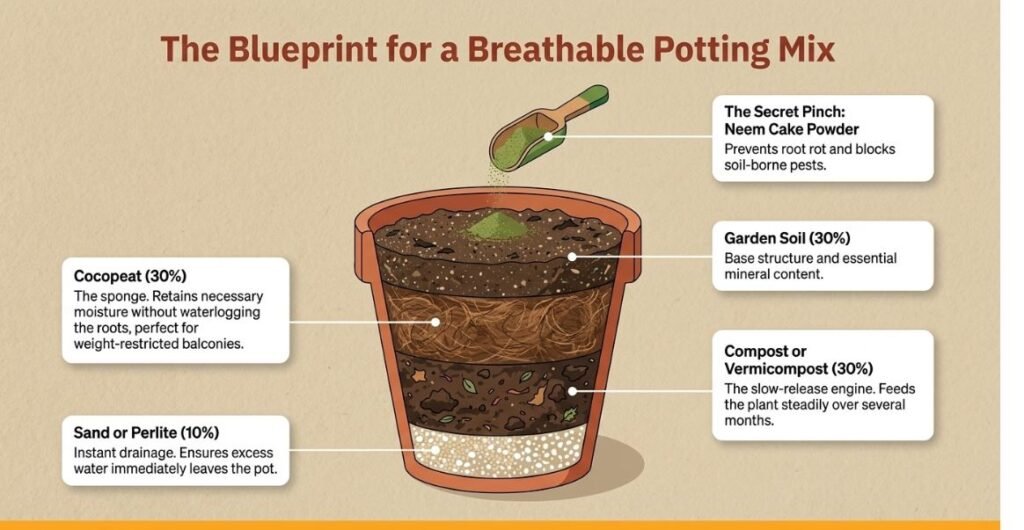
Never use plain garden soil in a pot. Garden soil compacts easily when watered, preventing water from draining and effectively suffocating the roots. Instead, create a lightweight, airy mix that provides nutrients while allowing for drainage.
- Garden Soil (30%): Provides a base structure and mineral content.
- Cocopeat (30%): Retains moisture without making the soil waterlogged. It is lightweight and perfect for high-rise balconies.
- Compost or Vermicompost (30%): Acts as a slow-release organic fertilizer, feeding your plants over months.
- Sand or Perlite (10%): Enhances drainage, ensuring that excess water leaves the pot immediately.
Additionally, always add a handful of Neem Cake powder. This natural Indian ingredient prevents root rot and keeps soil pests at bay, which is vital for maintaining low maintenance flowering plants for pots india.
3. Top 10 Low Maintenance Flowering Plants for Pots India
Now, let us dive into the stars of the show. These plants have been selected specifically for their ability to thrive in the Indian climate—from the 45-degree summers to the heavy monsoon showers—with very little fuss.
1. Bougainvillea (The Sun-Drenched Champion)
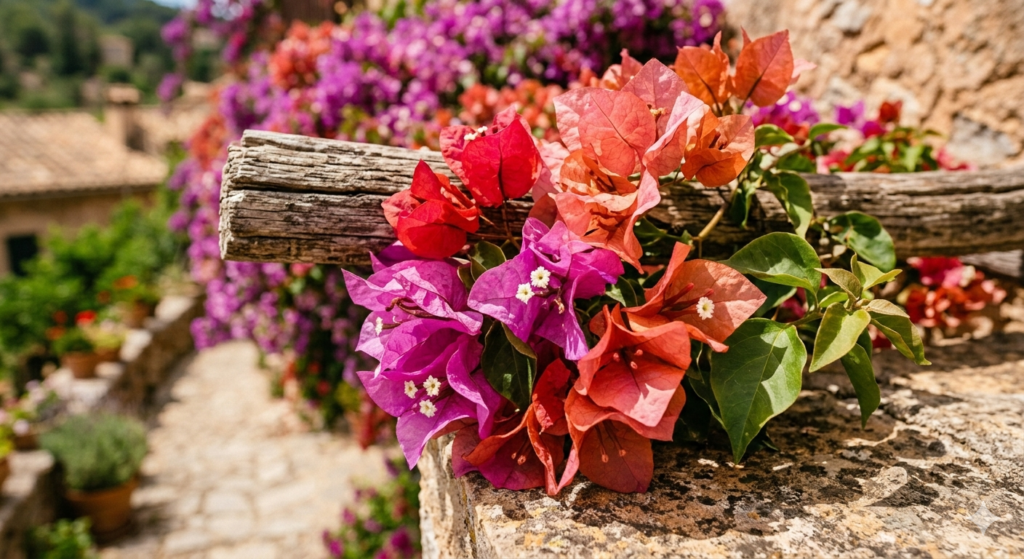
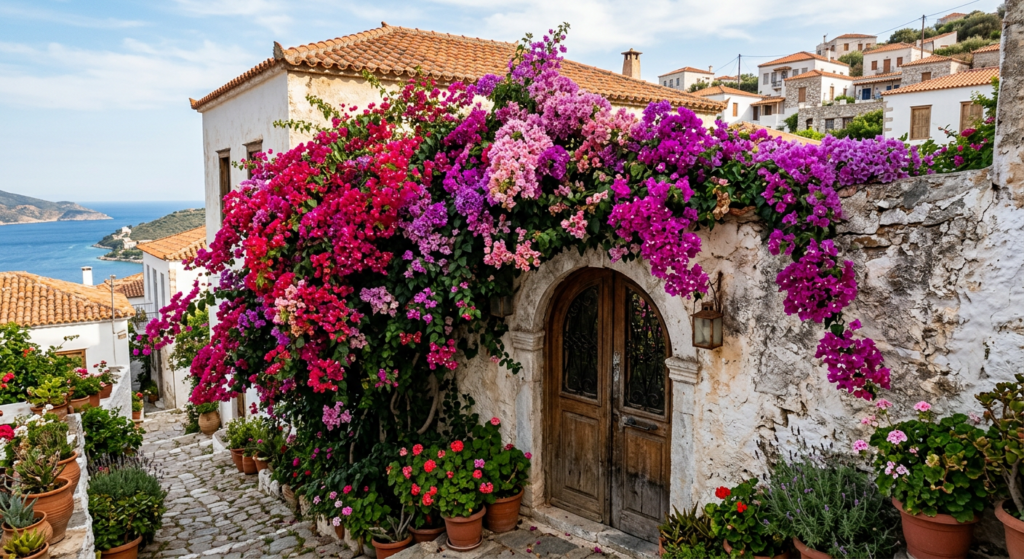
Bougainvillea is perhaps the king of low-maintenance plants in India. You often see them cascading over highway dividers or climbing old bungalows in vibrant hues of magenta and orange.
- Why it’s easy: It thrives on neglect. In fact, if you water it too much, it will grow lush green leaves but no flowers. It loves being “stressed” by the sun.
- Care Tip: Place it in the absolute sunniest spot on your balcony. It requires at least 6-8 hours of direct sunlight. Once established, water it only when the soil is bone dry.
2. Vinca / Periwinkle (Sadabahar)
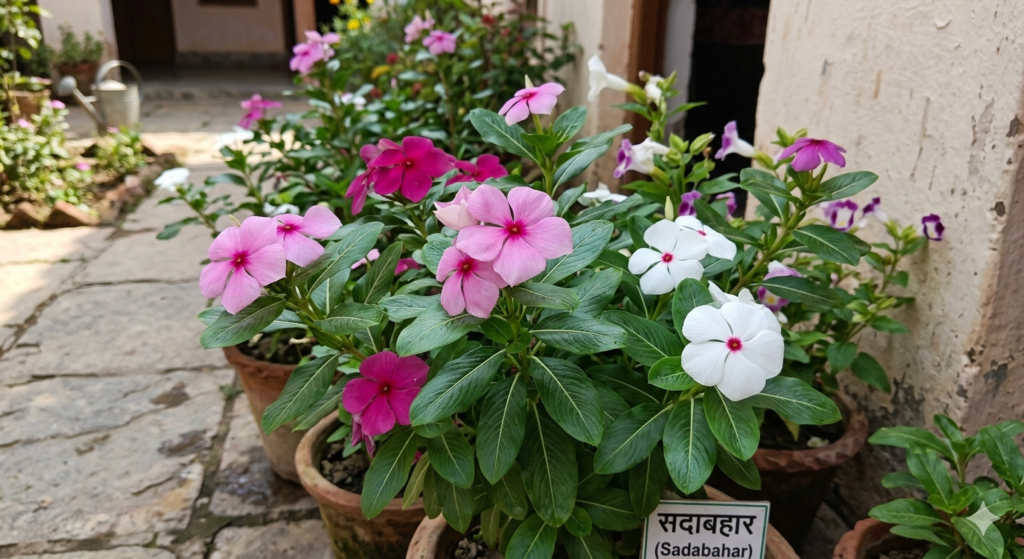
As the name ‘Sadabahar’ (Evergreen/Always Blooming) suggests, this plant blooms throughout the year. It is incredibly hardy and comes in beautiful shades of white, pink, and mauve.
- Why it’s easy: It is drought-tolerant, pest-resistant, and self-seeding. It can grow in almost any type of soil and rarely needs fertilizer.
- Care Tip: Avoid overwatering, as Vinca is susceptible to root rot if the soil remains soggy. It is the perfect “set it and forget it” plant.
3. Hibiscus (Gudhal)
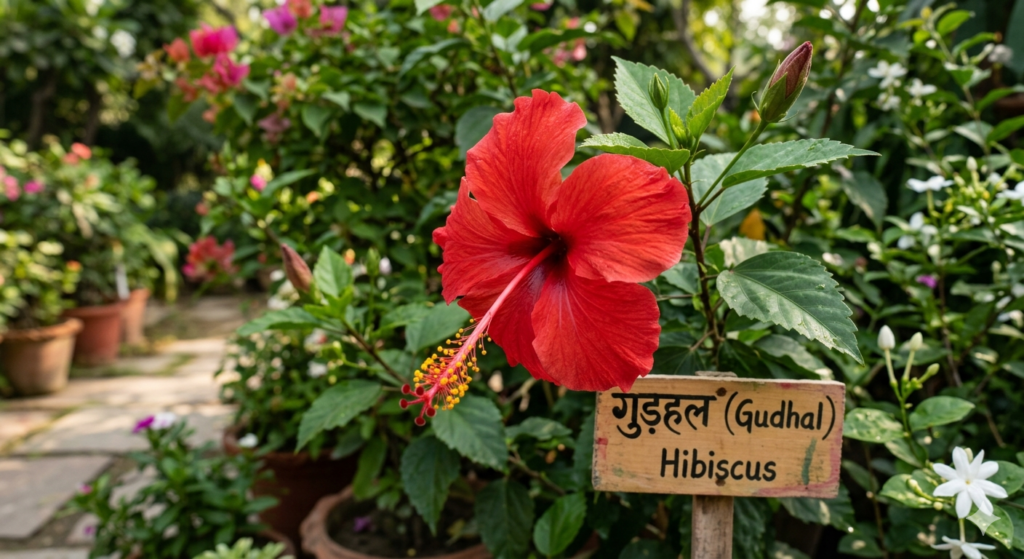
Hibiscus is a staple in Indian households, often used in religious ceremonies and traditional medicine. Modern hybrid varieties offer massive, dinner-plate-sized blooms in spectacular colors.
- Why it’s easy: Once established, a Hibiscus bush can live for decades. It loves the tropical Indian heat and provides a dense green foliage backdrop even when not in bloom.
- Care Tip: Prune it once a year after the monsoon to encourage new growth and more flowers. It appreciates a bit of compost every two months to keep the blooms coming.
4. Marigold (Genda)
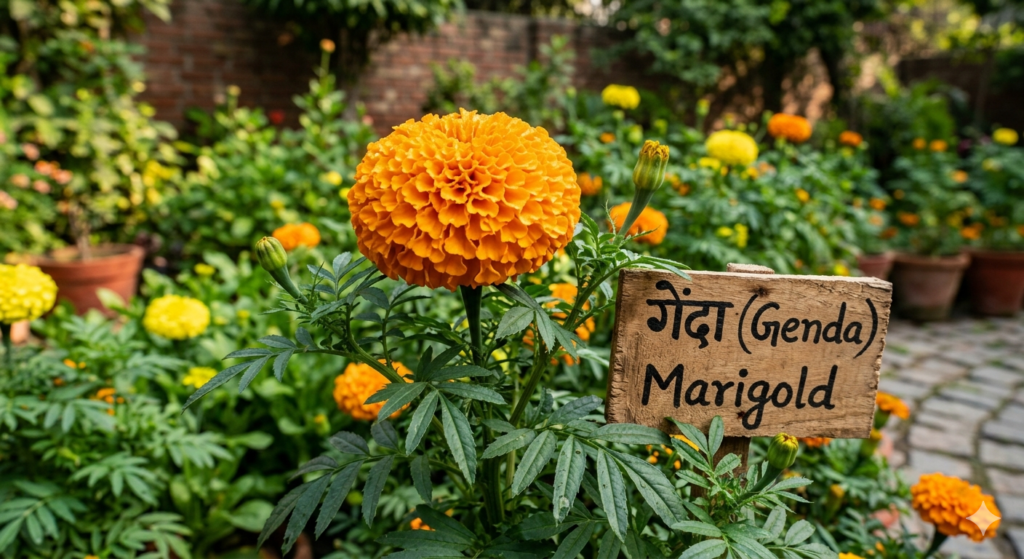
No Indian celebration is complete without Marigolds. These are excellent for beginners because they grow quickly from seeds and provide instant gratification.
- Why it’s easy: They are natural pest repellents. Their scent keeps aphids and other bugs away from your balcony, acting as a biological shield for your other plants.
- Care Tip: Deadhead (remove) faded flowers regularly. This simple act tells the plant to keep producing new buds rather than focusing on seed production.
5. Ixora (Rukmini)
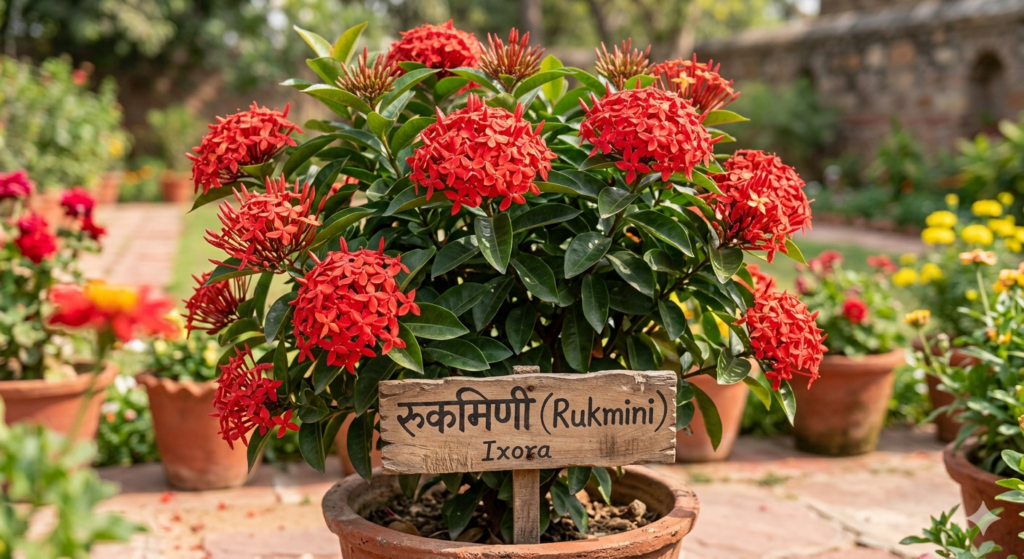
Ixora produces large, dense clusters of small flowers that look like a floral ball. It is an evergreen shrub that looks manicured and tidy without any pruning.
- Why it’s easy: It is very sturdy and can handle the intense humidity of coastal India (Mumbai, Chennai, Kolkata). It is rarely bothered by pests.
- Care Tip: It prefers slightly acidic soil. Adding used, dried coffee grounds to the pot once a month can help maintain the acidity and keep the leaves deep green.
6. Adenium (Desert Rose)
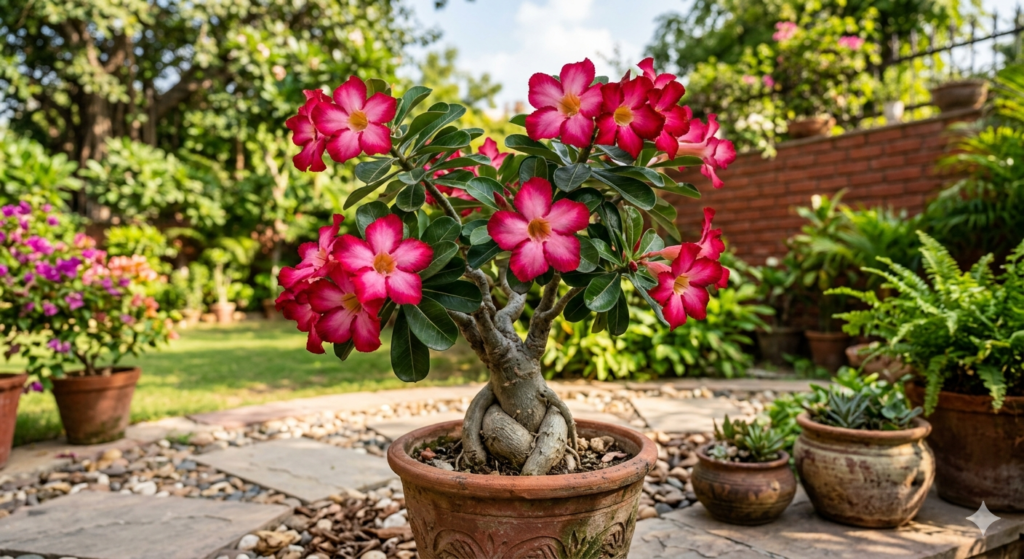
If you often forget to water your plants or travel frequently, the Adenium is your best friend. It has a thick, bulbous trunk (caudex) that stores water for weeks.
- Why it’s easy: It is essentially a succulent that produces stunning, rose-like flowers. It thrives in high heat and requires very little water.
- Care Tip: Use a very sandy potting mix to ensure rapid drainage. If the trunk feels soft, you are overwatering it; if it’s firm, the plant is happy.
7. Peace Lily (For Shaded Spots)
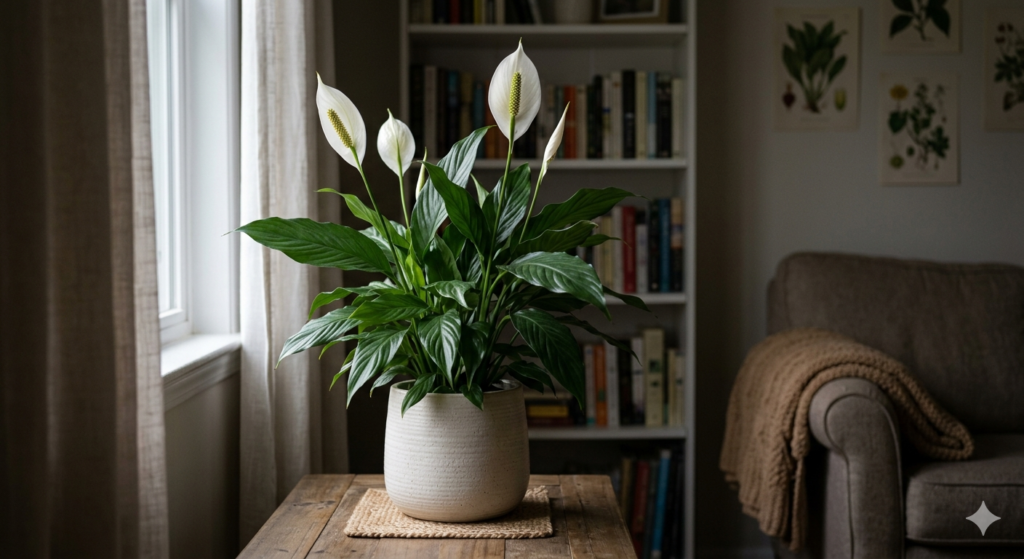
Not all balconies get direct sunlight. If you have a north-facing balcony or a shaded veranda, the Peace Lily is the most elegant low-maintenance choice.
- Why it’s easy: It literally “talks” to you. When it is thirsty, the leaves droop dramatically. Once you water it, it perks back up within hours.
- Care Tip: Keep it away from harsh afternoon sun, as the leaves will burn. It also acts as an excellent air purifier, removing toxins from the air.
8. Aparajita (Butterfly Pea)
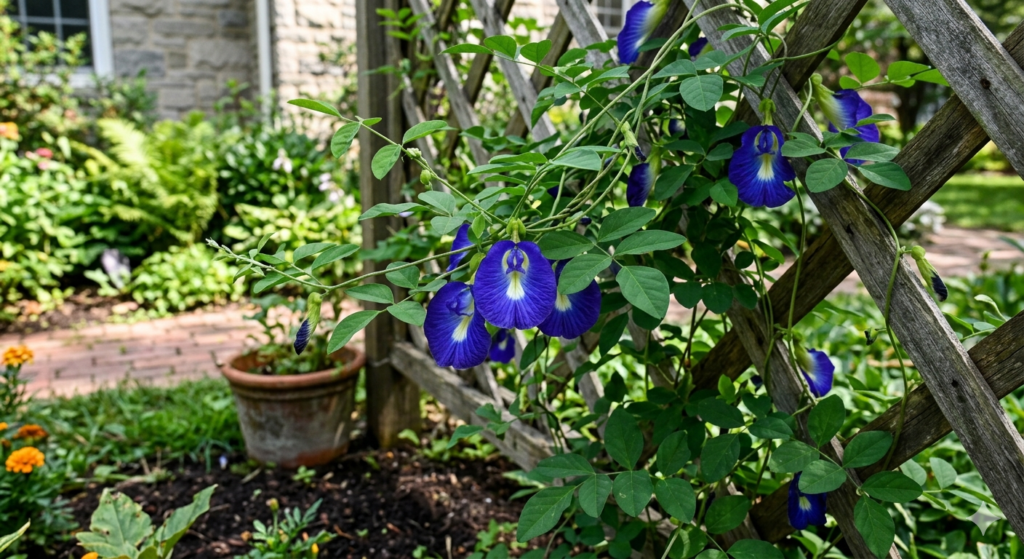
This is a beautiful climbing plant that produces stunning cobalt-blue or white flowers. In Indian tradition, it is associated with Lord Shiva and is considered highly auspicious.
- Why it’s easy: It grows incredibly fast and requires minimal fertilization. It can be grown as a vine or pruned into a small bush.
- Care Tip: Provide a small trellis or even a simple string for the plant to climb. The blue flowers can also be dried to make the famous “Blue Tea.”
9. Portulaca (Moss Rose / 9 o'Clock Flower)
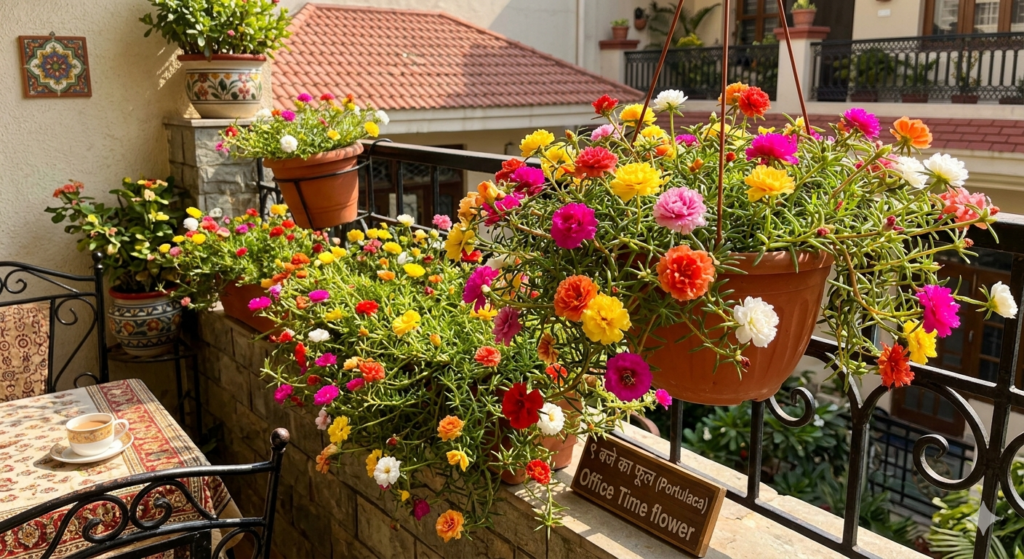
These are low-growing succulents that produce vibrant flowers that open precisely when the sun hits them (around 9 or 10 AM).
- Why it’s easy: You can grow them from a simple 2-inch cutting. They spread quickly and cover the pot like a colorful carpet, suppressing weeds.
- Care Tip: They love heat. The hotter the sun, the more they bloom. They are perfect for small hanging pots or window sills.
10. Jasmine (Mogra)
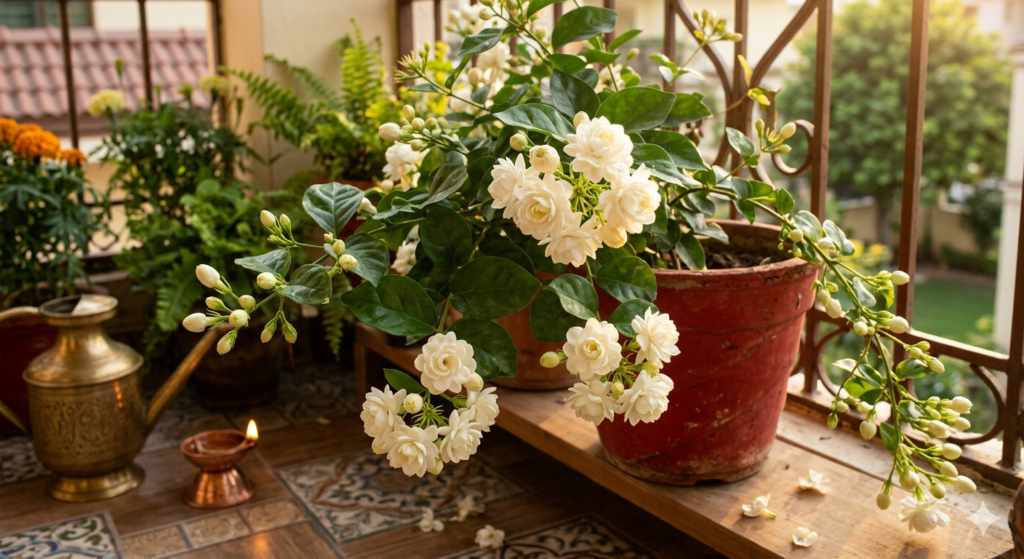
If you want fragrance, Mogra is essential. Its intoxicating scent is synonymous with Indian summer evenings and is used in perfumes and garlands.
- Why it’s easy: It is a tough woody shrub that handles the Indian summer with ease. It is a “heavy bloomer” that rewards minimal care with maximum fragrance.
- Care Tip: After the blooming season ends in late summer, give it a hard prune. This ensures a massive burst of fragrant flowers in the next flowering cycle.
4. Understanding the Indian Climate Zones for Container Gardening
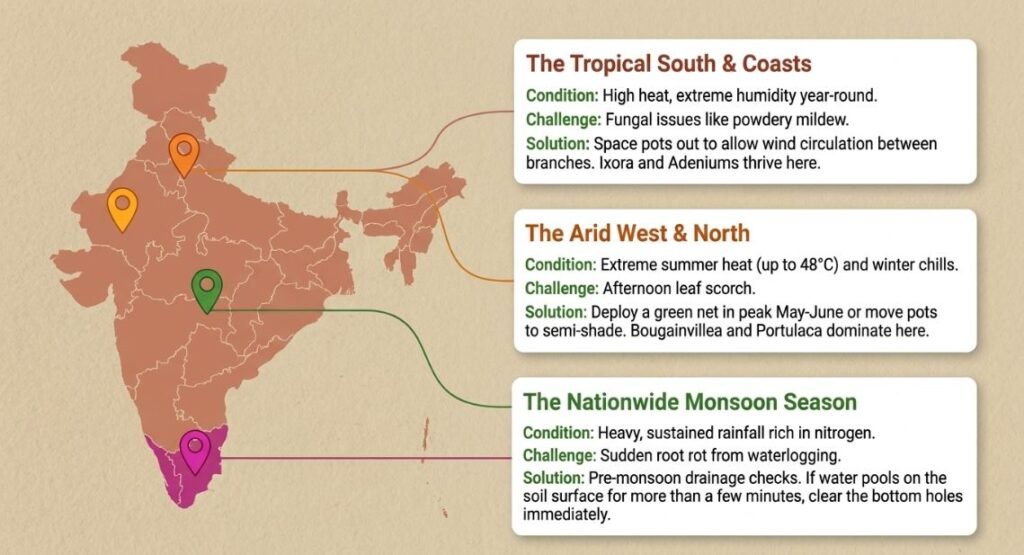
India is a vast country with diverse climatic conditions. To succeed with low maintenance flowering plants for pots india, you must understand how your local weather affects your plants’ needs.
The Tropical South and Coastal Regions
In cities like Chennai, Kochi, and Mumbai, the humidity is consistently high, and temperatures remain warm year-round. Plants like Ixora, Hibiscus, and Adeniums thrive here effortlessly. However, high humidity can sometimes lead to fungal issues like powdery mildew. Consequently, ensure your pots are not crowded too closely together, allowing for good air circulation between the branches.
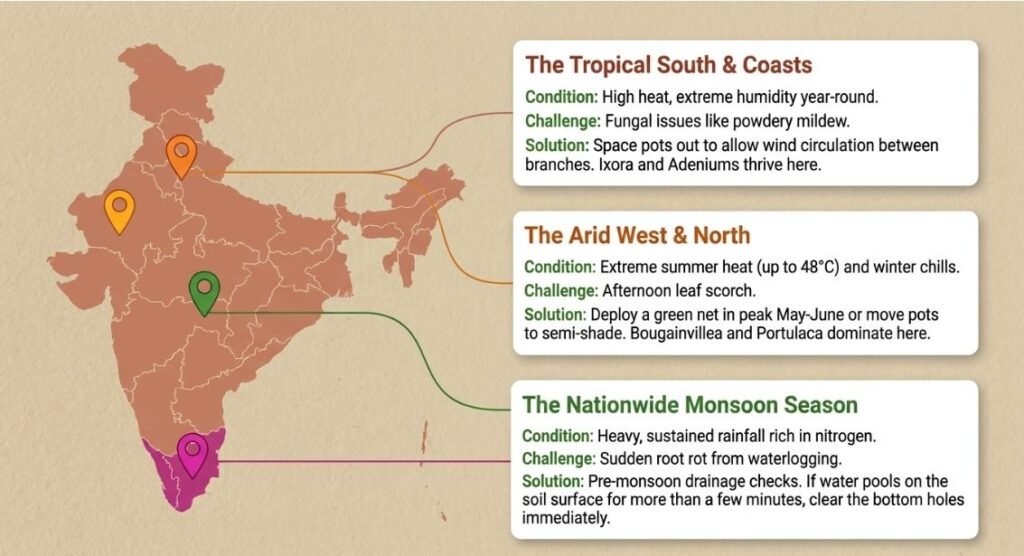
The Arid West and North
States like Rajasthan, Punjab, and Delhi experience extreme heat in summer (sometimes reaching 48°C) and significant cold in winter. During the peak of summer (May-June), even low-maintenance plants might need a bit of relief. Using a “green net” or moving pots to a semi-shaded area during the afternoon can prevent leaf scorch. Bougainvillea and Portulaca are the champions of this climate, as they can withstand the heat with ease.
The Monsoon Season
The Indian monsoon is a blessing and a curse. While the rainwater is rich in nitrogen (which makes plants turn neon green), the excessive moisture can lead to root rot. Therefore, always check the drainage holes of your pots before the rains start. If water sits on top of the soil for more than a few minutes, your drainage is blocked, and you must clear it to save the plant.
5. Watering and Feeding Strategies for Busy Gardeners
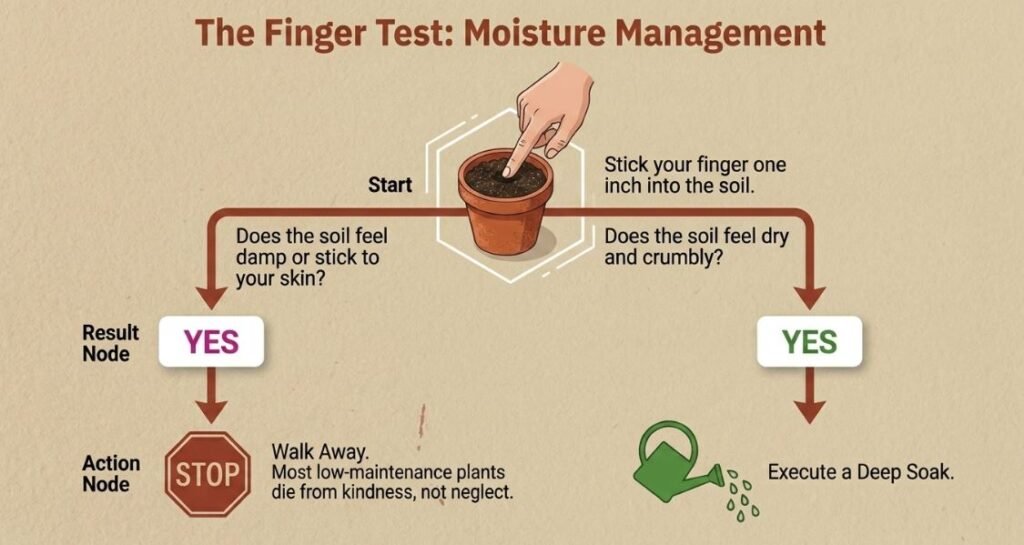
The biggest mistake beginners make is overwatering. Most low maintenance flowering plants for pots india die from “kindness” (too much water) rather than neglect. In a tropical climate, moisture management is the key to longevity.
The Finger Test: Your Best Tool
Before reaching for the watering can, stick your finger an inch into the soil. If the soil feels damp or sticks to your skin, walk away. If it feels dry and crumbly, give the plant a deep soak. This simple habit prevents 90% of plant deaths.
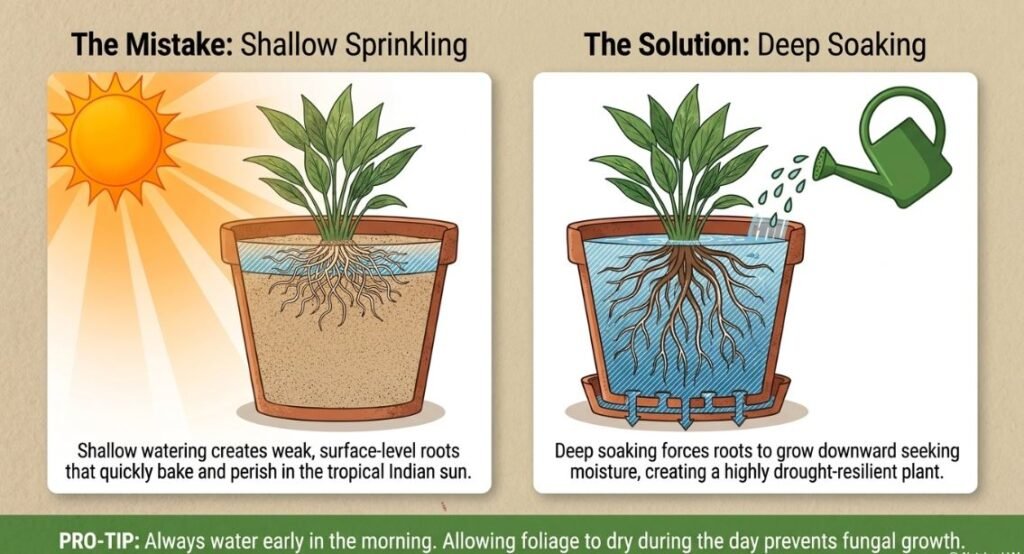
Deep Watering vs. Shallow Sprinkling
Always water your pots until you see water draining out of the bottom holes. This ensures that the roots at the very bottom of the pot get hydrated. Shallow sprinkling only wets the top layer, encouraging weak, surface-level root systems that cannot withstand heat. Furthermore, try to water your plants early in the morning. This allows the foliage to dry during the day, which prevents fungal growth and pests.
Fertilizing Without the Fuss
Low-maintenance plants do not need heavy chemical feeding. In fact, too much fertilizer can lead to salt buildup in pots, which burns the roots. Instead, adopt a “slow and steady” organic approach.
- Vermicompost: Add two handfuls to each pot every two months. This acts as a complete multivitamin for the plant.
- Liquid Seaweed Fertilizer: This is a miracle worker for flowering plants. Mix 2ml in a liter of water and spray it on the leaves once a month for a boost in bloom size and color intensity.
- Kitchen Scraps: Don’t throw away banana peels or eggshells. Soak dried banana peels in water for 24 hours and use this water for your Hibiscus or Roses. It is rich in potassium, which is the primary nutrient required for flower production.
6. Managing Pests and Diseases Organically
Even the toughest plants can occasionally attract unwanted guests. However, you don’t need harsh, toxic chemicals to keep your garden healthy. In an Indian household, the solution is often already in your kitchen or local store.
Common Indian Garden Pests
- Mealybugs: These look like small cottony white spots, often found in the “armpits” of Hibiscus leaves.
- Aphids: Tiny green or black insects that cluster on new, tender buds and suck the sap.
- Spider Mites: Tiny reddish dots that create fine webs under leaves during dry, hot weather.
The Neem Oil Solution
Neem oil is an Indian gardener’s best weapon. It is organic, safe for pets, and highly effective against over 200 species of pests.
- How to use: Mix 5ml of Neem oil and 2-3 drops of liquid dish soap in a liter of water. Shake well and spray on your plants every 15 days as a preventive measure. If you already have an infestation, spray every 3 days until the pests disappear. This is a non-negotiable step for maintaining low maintenance flowering plants for pots india.
The Power of Turmeric and Cinnamon
If you see ants in your pots or white mold on the soil surface, sprinkle a little turmeric powder or cinnamon powder. Both have strong anti-fungal and insect-repellent properties that are safe for the plant but annoying for the pests.
A collection of random pots can look cluttered if not organized with intent. Styling is the final step in your beginner’s journey, turning a hobby into a lifestyle.
Play with Heights and Layers
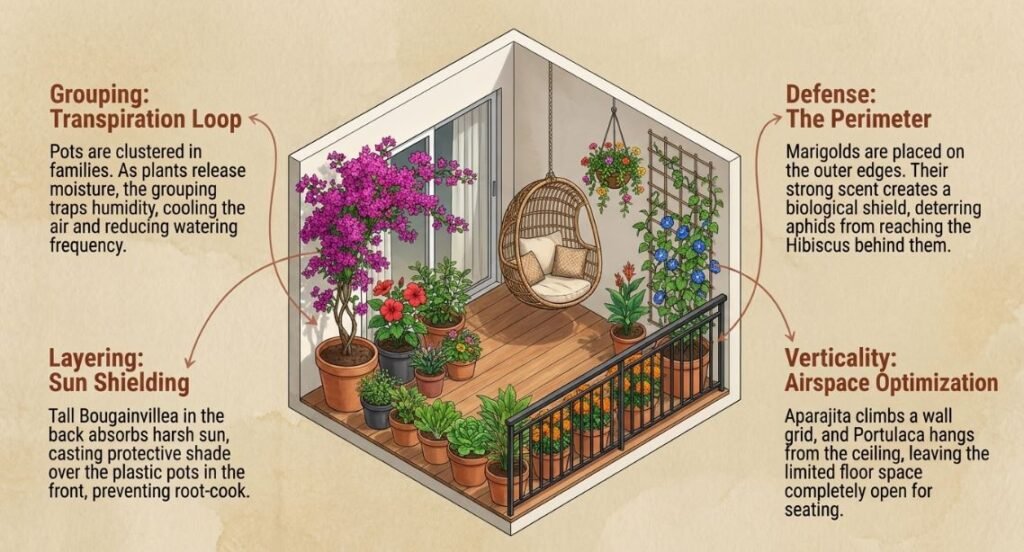
Don’t place all your pots on the floor. This makes the space look “flat.” Instead, use plant stands, old wooden crates, or even sturdy stools to create different levels. Placing taller plants like Bougainvillea in the back and shorter ones like Portulaca or Vinca in the front creates a sense of depth and mimics a natural landscape.
Grouping Plants for a Micro-Climate
Group your plants together in “families.” This not only looks aesthetically pleasing but also helps the plants survive the heat. Plants “transpire” (release moisture through leaves), and grouping them helps keep the surrounding air humid. This reduces the amount of water lost to evaporation, making your garden even more low-maintenance.
Color Coordination for Elegance
You can choose a color theme for a sophisticated look. For instance:
- The Moon Garden: Use White Vinca, White Hibiscus, and Mogra. This garden will glow in the moonlight and smell heavenly at night.
- The Tropical Fiesta: Mix bright orange Marigolds, pink Bougainvillea, and red Ixora for a high-energy, cheerful space.
Vertical Gardening
If you have a very small balcony, look upward. Use hanging planters for Vinca or Portulaca. Install a metal grid or a simple jute rope on the wall for the Aparajita vine to climb. This leaves the floor space free for a small chair and table where you can enjoy your morning tea amidst your blooms.
Conclusion: Start Small and Grow Gradually
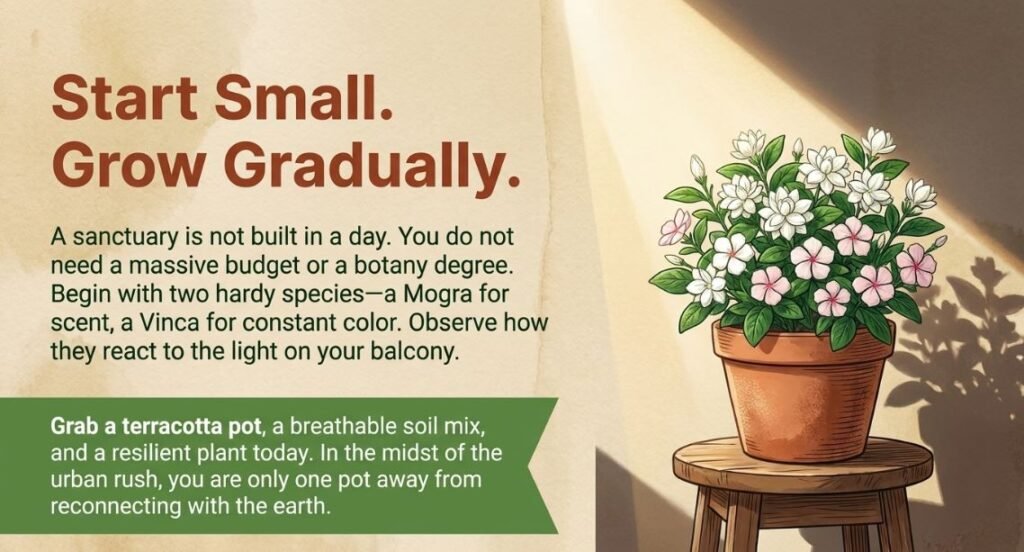
Creating a garden with low maintenance flowering plants for pots india is a journey of discovery. You do not need a massive budget or a degree in botany. You simply need a bit of patience and the right choice of plants.
Start with just two or three hardy species—perhaps a Mogra for its scent and a Vinca for its constant flowers. Observe how they react to the light on your balcony and how they change with the seasons. As your confidence grows, so will your garden.
Despite the noise and dust of urban India, your balcony can become a sanctuary of peace, a place where you reconnect with the earth. Grab a terracotta pot, some good soil, and a hardy plant today. Your future self—sitting amidst a blooming, fragrant sanctuary—will thank you for it.